Why Shaded Roofs in South London Grow the Most Moss
Ever wondered why your roof is green with moss while the house across the road looks almost clean? You are not unlucky, and you have not done anything wrong. The difference is almost always shade, and in the leafy suburbs of South London there is plenty of it.
Moss is a simple organism with simple needs, and a shaded South London roof gives it everything on the list. Once you understand what feeds it, keeping it under control gets a lot easier. Here is why some roofs here grow so much more moss than others, and what actually slows it down.
The quick answer: Moss needs damp and shade, and shaded or north-facing roofs stay wet for hours longer after rain, which is exactly what it wants. South London's tree-lined streets and leafy gardens make this worse. A soft wash with a biocide treatment clears the moss and keeps it slow for years.
1. Moss wants damp and shade, nothing more
Moss has no roots to draw water from the ground. It takes moisture straight from the air and the surface it sits on, so it thrives wherever a roof stays wet for long stretches. Give it damp and shade and it settles in.
That is the whole secret. A roof that dries quickly in sun and wind gives moss almost nothing to work with. A roof that stays cold and damp becomes a carpet. Everything else is detail.
2. Why leafy South London suits moss so well
The suburbs south of the river are some of the greenest in the capital. Dulwich, Sydenham, Forest Hill, and Beckenham are full of mature trees, big gardens, and tree-lined roads, and that greenery is part of why people love living here.
It also keeps roofs damp. Overhanging branches block the sun and drip long after the rain stops, and dense tree cover slows the drying breeze. A roof surrounded by tall trees can stay wet almost all day in winter, which turns it into prime moss territory.
3. North-facing slopes stay wet the longest
Look at your own roof and you will often see the moss is worse on one slope than the other. The heavy growth is nearly always on the side that faces north or northeast, and the reason is simple. That slope gets the least direct sun.
A south-facing slope dries within an hour or two of a shower. The north-facing side can stay damp all day, especially in the low winter sun, when it may get no direct light at all. Same roof, same tiles, wildly different amounts of moss, decided by which way the slope points.
4. The microclimate of a single street
Two houses a few doors apart can grow very different amounts of moss, and it comes down to their own little pocket of conditions. One sits open to the sky with a south-facing front. The other tucks behind a big horse chestnut with a north-facing rear slope over a shaded garden.
Hills play a part too. Around Crystal Palace, Sydenham Hill, and the Norwood ridge, north-facing slopes sit in longer shadow and cooler, damper air. If your house is on the shaded side of a hill under trees, your roof will always fight harder against moss than a place out in the open.
5. What moss does to your tiles over time
A thin green film is mostly a cosmetic thing. Thick, established moss is a slow, expensive problem. It holds water against the tiles like a sponge, which speeds up wear and gives winter frost more to work with.
It breaks off in clumps and slides into the gutters, blocking them and sending water down the walls. And as it grows it pushes under the laps of the tiles, lifting them just enough to let water past. Leave it long enough and a cosmetic problem becomes a leaking one.
6. Cutting the damp: light, air, and treatment
You cannot move your house into the sun, but you can take away some of what moss loves. Cutting back overhanging branches lets more light and air reach the tiles so they dry faster. Keeping gutters clear stops water pooling at the roof edge.
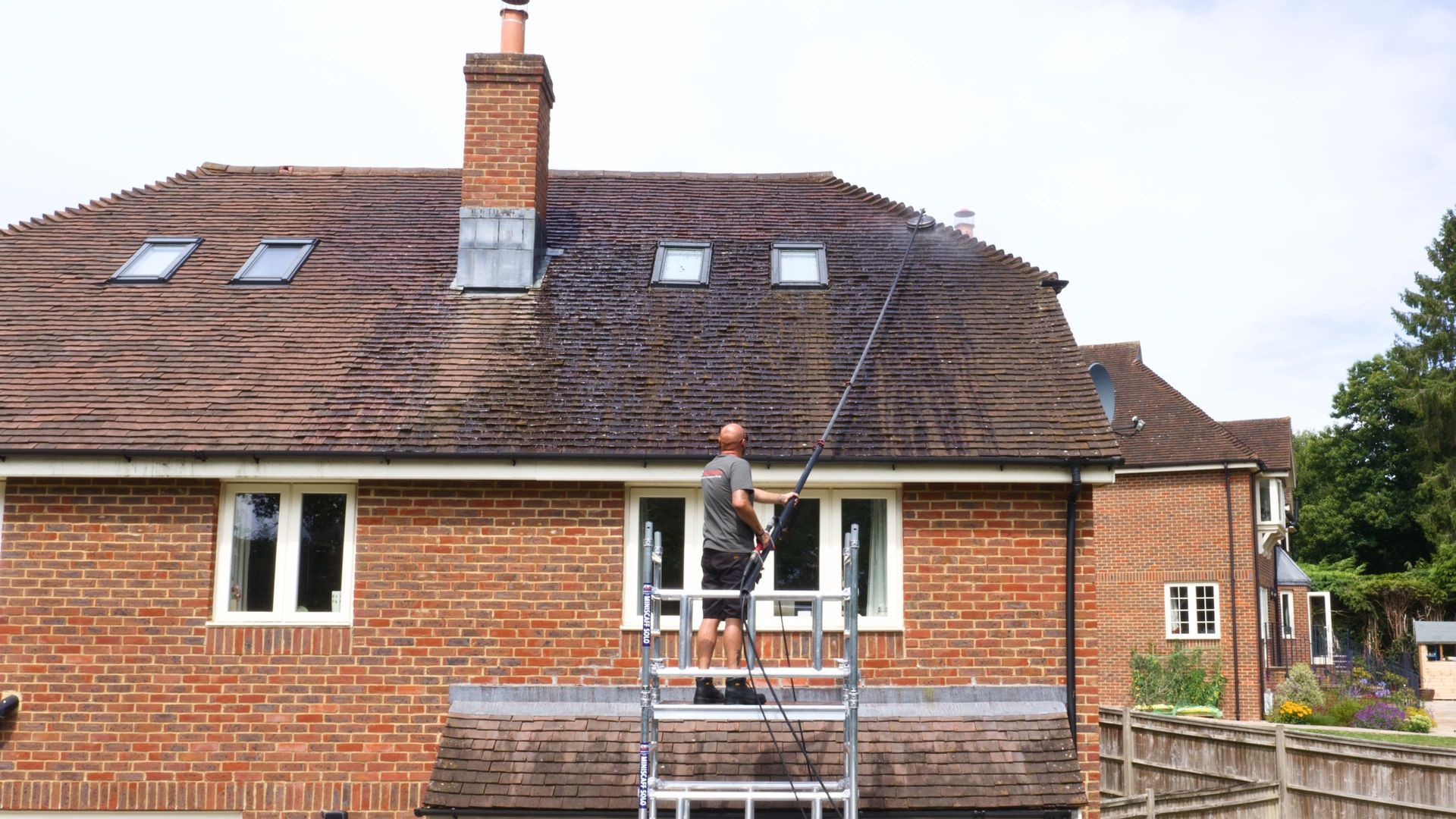
The real fix is a proper soft wash with a biocide treatment. It clears the existing moss without damaging the tiles and keeps regrowth slow for a few years rather than a few months. On a heavily shaded South London roof, that treatment is the difference between an occasional clean and a constant one.
What keeps a South London roof damp and moss-friendly:
- Overhanging trees and branches: block sun and drip long after rain stops.
- A north or northeast-facing slope: gets the least direct sun and dries slowest.
- A shaded, sheltered garden: less breeze to dry the roof out.
- Older, porous tiles: rough surfaces that soak up and hold water.
- Blocked gutters: standing water keeping the roof edge permanently wet.
Frequently Asked Questions
Why is the moss only bad on one side of my roof?
That side almost certainly faces north or northeast and gets the least sun, so it stays damp longest. The sunny slope dries fast and grows far less moss.
Will cutting back my trees get rid of the moss?
It helps a lot by letting more light and air reach the roof, so it dries faster. It will not remove existing moss on its own, but it slows regrowth alongside a proper clean.
Is moss actually damaging my roof or just ugly?
A thin layer is mostly cosmetic. Thick moss holds water, blocks gutters, and lifts the tile laps over time, so established growth is worth clearing before it causes leaks.
How long will my roof stay clear after cleaning?
With a biocide treatment, usually a few years. Heavily shaded, tree-covered roofs will see moss return sooner than open, sunny ones, so shade is the main factor.
Can you clean a roof that sits right under big trees?
Yes. Access takes a little more care, but shaded roofs under trees are exactly the ones that benefit most from a clean and treatment, since they grow moss fastest.
Roof gone green in the shade?
Ben's Roof Cleaning clears moss and treats roofs to slow its return across South London, with over 15 years of experience. Get in touch or call 020 3435 9666
for a free, no-obligation quote.
Living with the shade, without the moss
The trees and greenery are part of what makes South London worth living in, so the moss they encourage is a fair trade. You just have to manage it. Let in what light and air you can, keep the gutters clear, and treat the roof properly when the moss takes hold. Do that and even a shaded, north-facing roof stays clear for years at a time.