What to Expect on the Day of a Roof Clean
You have booked your roof clean, the date is in the diary, and now you are wondering what the day will actually look like. Will it be noisy? Do you need to be home? What about the garden and the cars?
Knowing what happens takes the mystery out of it. A roof clean is a fairly calm job when it is done properly, with more careful setup than dramatic action. Here is a step-by-step walk through of a typical day on a South London property.
The quick answer: On the day, we turn up, protect the area around the house, set up safe access, clear the worst of the moss by hand, then apply the soft wash biocide at low pressure. It is not a loud, messy jet-wash job. You do not usually need to stay in, the garden is protected, and the roof keeps clearing for weeks afterwards as the weather rinses the dead growth away.
1. Before we arrive
Most of the thinking happens before the day itself. When we quote, we have already looked at your roof, so we know its size, pitch, the moss level and how we will get up there safely. That means we turn up with the right kit rather than working it out on your doorstep.
A little help from you makes things smoother. Clearing a space on the drive, unlocking the side gate and moving a car off the front all give us room to work. On tight South London streets, a free spot near the house saves a surprising amount of time.
If there is anything unusual about access, a shared alley, a locked rear passage or a neighbour's fence in the way, it helps to flag it when you book. Surprises on the day are the only thing that slows a job down.
2. Setting up safely
The first thing that happens on arrival is setup, and this is where care matters most. Working at height is the serious part of the job, so ladders and access equipment go up properly before anyone climbs. Rushing this stage is how accidents happen, so we do not.
We also protect the area below. Plants near the house, paths and any delicate borders get sensible cover or care, so nothing gets trampled or splashed with debris coming off the roof.
On a three-storey Victorian terrace in Clapham the setup takes longer than on a low bungalow, simply because the height is greater. Whatever the property, the roof is not touched until the access is solid.
3. Clearing the moss by hand
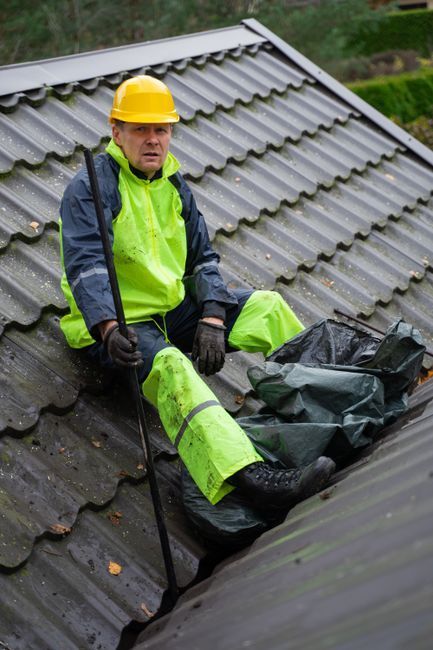
With access sorted, the hands-on work begins. On a roof with thick moss, we clear the bulk of it first, gently scraping and brushing the heavy growth off the tiles. This is the part that produces most of the visible mess.
All that moss has to go somewhere, so it comes down off the roof and gets gathered up rather than left scattered across your garden. Gutters usually get cleared at this stage too, since a lot of the moss ends up in them anyway.
You might be surprised how much comes off a neglected roof. Years of growth on a shaded North-facing slope can fill several bags. Clearing it by hand first means the treatment can reach the tiles properly.
4. Applying the soft wash
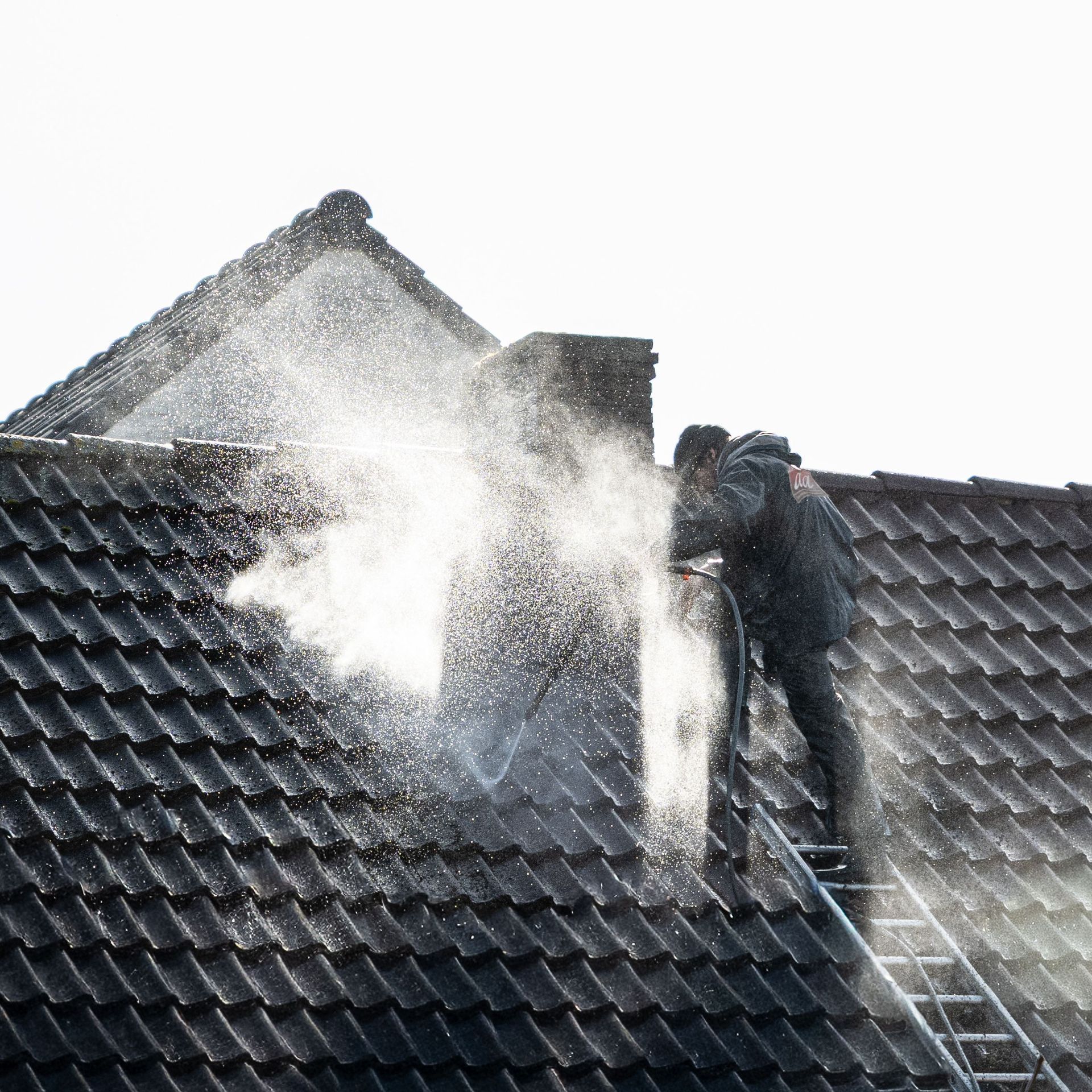
Now the key step. Once the bulk is off, we apply the biocide treatment across the roof at low pressure. This is the quiet part of the day. There is no roaring jet wash, just a steady, careful application that soaks into whatever growth is left.
The low pressure is deliberate. High pressure can damage tiles and force water under slates, which is exactly what we avoid on those older South London roofs. The chemistry does the work, not brute force.
This stage is less about instant drama and more about setting up the slow result. The treatment starts killing the moss, algae and lichen at the root from the moment it goes on.
- Clear parking: a free spot near the house lets us unload and set up quickly on tight streets.
- Unlocked access: an open side gate and clear passage save time getting equipment to the back.
- Protected garden: plants and paths near the house are covered or cared for before work starts.
- Safe setup first: ladders and access go up properly before anyone climbs, every time.
- Debris gathered up: moss cleared off the roof is collected rather than left scattered across your garden.
5. Tidying up and the walk round
When the work is done, the clean up is part of the job. Moss and debris get bagged, paths get cleared and the site is left tidy. You should not be finding piles of dead moss in the borders a week later.
It is a good moment to have a look together at what has been done. We can point out anything worth knowing, like a slipped tile spotted from the ladder or a gutter joint that has seen better days. That is information, not a hard sell.
How long the whole day takes depends on the roof. A small terrace might be a few hours, while a big detached house with heavy moss and full gutters takes longer. We will give you a realistic idea when we book.
6. What happens over the following weeks
Here is the part that catches people out, so it is worth saying clearly. The roof will keep improving after we leave. The biocide carries on killing the growth, and the dead moss and algae loosen their grip over the following weeks.
Then the weather takes over. South London's regular rain gradually rinses the dead growth off the tiles, so the roof often looks its best a month or two after the visit rather than on the day. That slow finish is normal and by design.
So if you look up the day after and still see some faded growth, do not worry. It is dead and on its way off. Blasting it all off with pressure would have risked the tiles, and this gentler route protects them.
Frequently Asked Questions
Do I need to be home for the roof clean?
Usually not, as long as we have access to the areas we need. It helps to be reachable by phone, and many people prefer to be around for the walk round at the end, but it is not essential.
Is it a loud, messy job?
Less than you might think. Soft washing uses low pressure, not a roaring jet, so it is fairly quiet. The messiest part is clearing thick moss by hand, and we bag that up rather than leaving it.
Will my garden and plants be protected?
Yes. We take sensible care of plants, paths and borders near the house before we start and gather up the debris that comes off the roof. Flag any prized plants when we arrive.
How long does a roof clean take?
It depends on the size of the roof, the moss level and access. A small terrace can be a few hours, a large house with heavy growth takes longer. We give a realistic estimate when booking.
Why does the roof still look green right after?
Because the biocide works slowly and the weather rinses the dead growth off over the following weeks. The roof keeps clearing after we leave and often looks best a month or two later.
Ready to book your roof clean?
Ben's Roof Cleaning cleans roofs, clears moss and sorts gutters across South London, with over 15 years of experience. Get in touch or call 020 3435 9666
for a free, no-obligation quote.
A roof clean is a calm, careful day, not a dramatic one
Once you know the shape of the day, there is nothing to be nervous about. Careful setup, moss cleared by hand, a gentle soft wash and a proper tidy up. The loud, messy blasting people imagine simply is not how it works.
Give us clear access, expect a quiet job, and let the weather finish the result over the following weeks. That is a roof clean done the way it should be.